


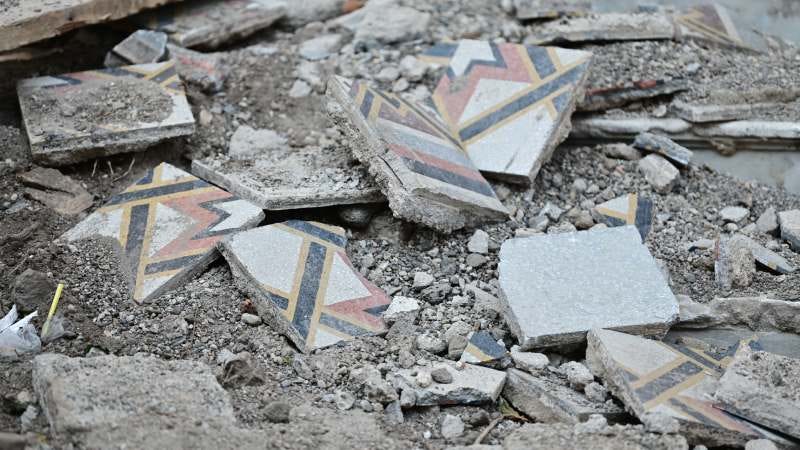
Since coming into power in 2019, the Nayib Bukele regime embarked on a large-scale “revitalization” of the Historic Center of San Salvador. But rather than carrying out renovations that: 1) modernized the aesthetics of the Historic Center; 2) maintained its cultural and economic purpose as a commercial hub; and 3) protected the livelihoods of existing residents, the regime instead harassed, threatened, and evicted thousands of street vendors, local businesses, and long-time residents. The end product white-washed away the “third-world” working-class aesthetics of the Historic Center and replaced it with a generic and bland sterility befitting a shopping-mall perpetually stuck in holiday-season. Surely, many Salvadorans would call these changes “progress,” but progress for whom?
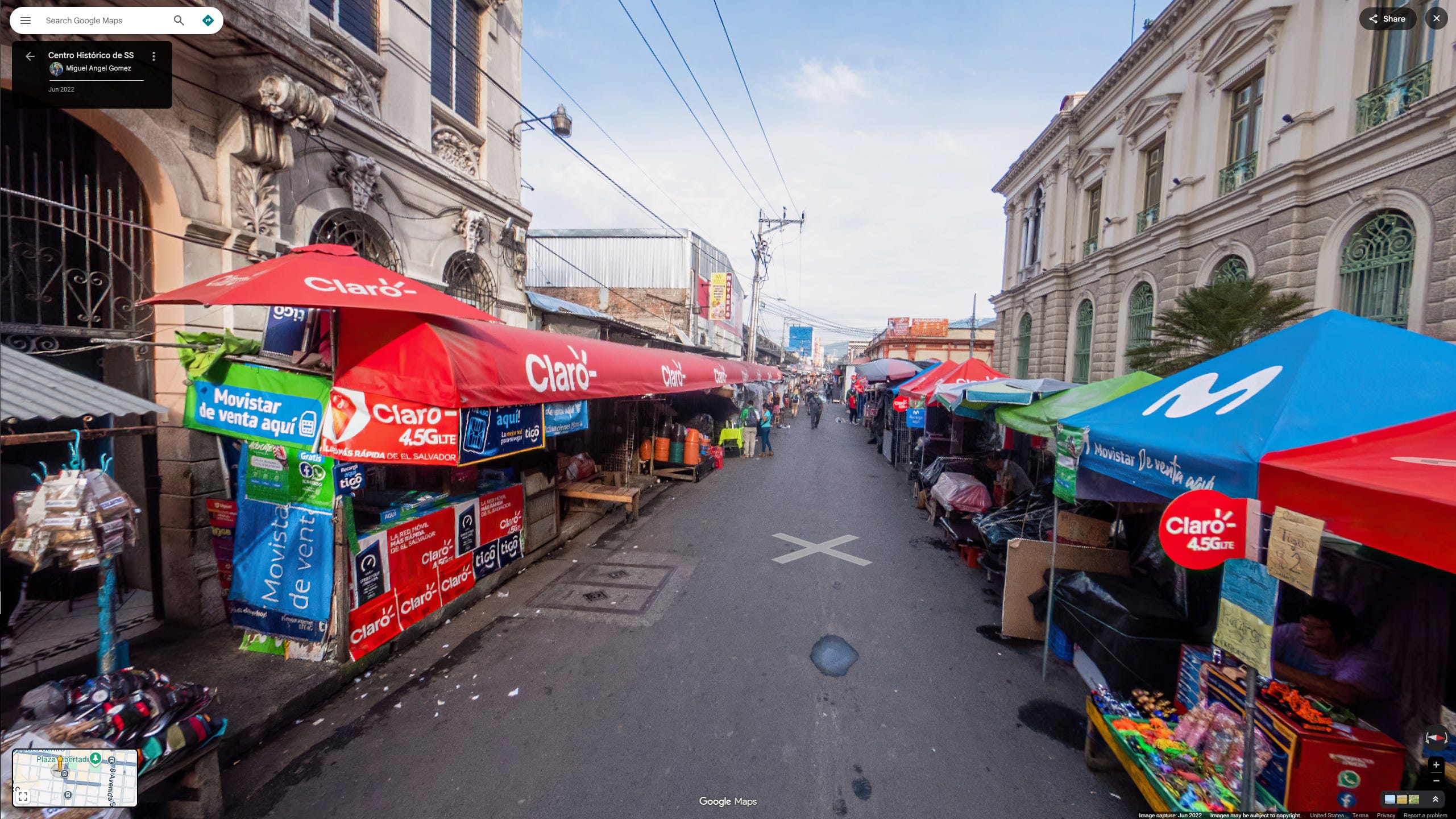
Gentrification, as it is being experienced across Latin America, is a neo-liberal process of urban renovation wherein the higher economic classes appropriate poor and working-class neighborhoods and displace and replace the existing residents, resulting in a socioeconomic and cultural reconfiguration of geographic space.
However, there is another neo-liberal urban renovation process called “touristification,” which seeks the transformation of urban space to accommodate the needs of temporary visitors and promote leisure and consumption activities. Public spaces experience a symbolic transformation that promotes an idealized image of said space. Finally, rather than replacing the displaced former residents, touristification substitutes them with a “floating population” of visitors.
While gentrification reconfigures the social fabric of a given space, touristification leaves a space devoid of a social fabric.
The gentrification and turistification boom are direct responses to the globalizing neoliberal urban development model favored by right-wing governments. This model prioritizes the privatization public spaces, favors a service sector economy, and the patrimonialization of historic centers--that is, the assignation of historic, symbolic, or cultural value to a public space as “heritage.” While patrimonialization may seem like a positive, under the neoliberal model it actually strips historic centers (and public spaces in general) of their actual cultural and patrimonial value and converts them into a consumables.
The historic center, thus, becomes just one more product for consumption and its inhabitants become both consumers and consumables. The public space becomes solely an economic driver and loses its social and cultural purpose.
Tourism and real estate investment become instruments of territorial transformation, which are then legitimized through the discourse of “modernization” and “economic development.” But behind this narrative hides a “social reconfiguration” that prioritizes consumption, aesthetic, and profitability over the basic right to live in the city.
As a result of the ongoing gentrification and touristification project of the Historic Center of San Salvador, the following populations have been affected or displaced:
Street vendors & informal economy workers: displaced by policies that seek to create “open space” for tourism.
Low-income long-time residents: displaced to the periphery by the ever-increasing rental prices.
Elderly residents: who have lost community services and the use of common spaces that have now been converted for commerce and tourism.
Traditional families: whose homes have been replaced by stores, hotels, cafés, or temporary housing.
Street artists: who lost performance space which was the source of their livelihoods.
Artisans & traditional trades: have lost space to businesses that cater to foreign tourism.
Neoliberal urbanism conceives of the city as an economic resource rather than a space for the exertion of rights. Thus, the challenge for contemporary territorial management consists in developing urban policies that can achieve an equilibrium between revitalization and social inclusion. This can only be achieved with the full participation of citizens and the preservation of collective historical memory.1
NOW FOR SOME EXTRA DETAILS
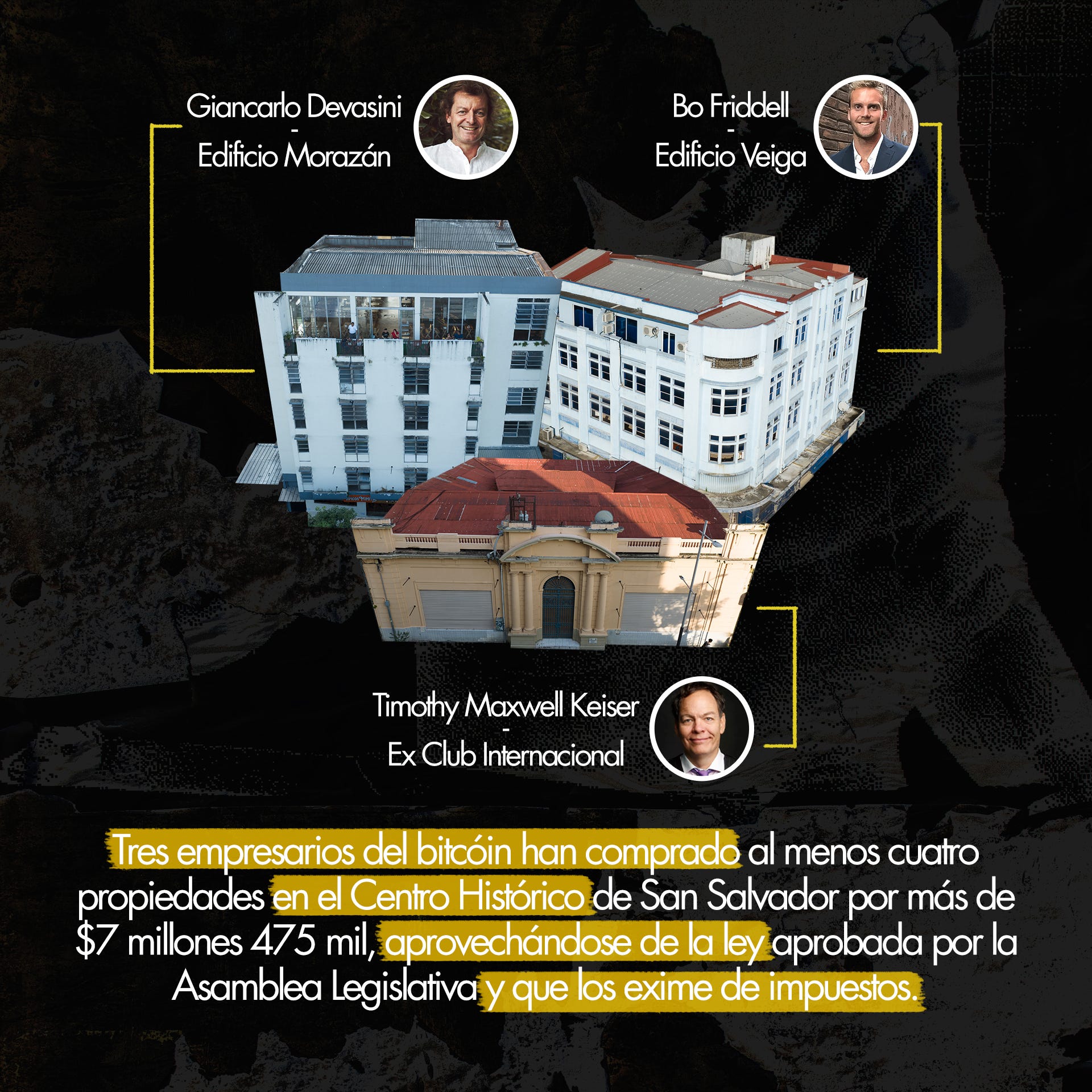
In November of 2024, Revista Factum reported that three Bitcoin entrepreneurs, had purchased at least (4) properties in the Historic Center of San Salvador amounting to $7.47 million--taking advantage of a law passed by the Bukele-controlled National Assembly that allowed for the purchase and transfer of properties in El Salvador without paying any taxes. All three Bitcoin entrepreneurs are close associates of Nayib Bukele.
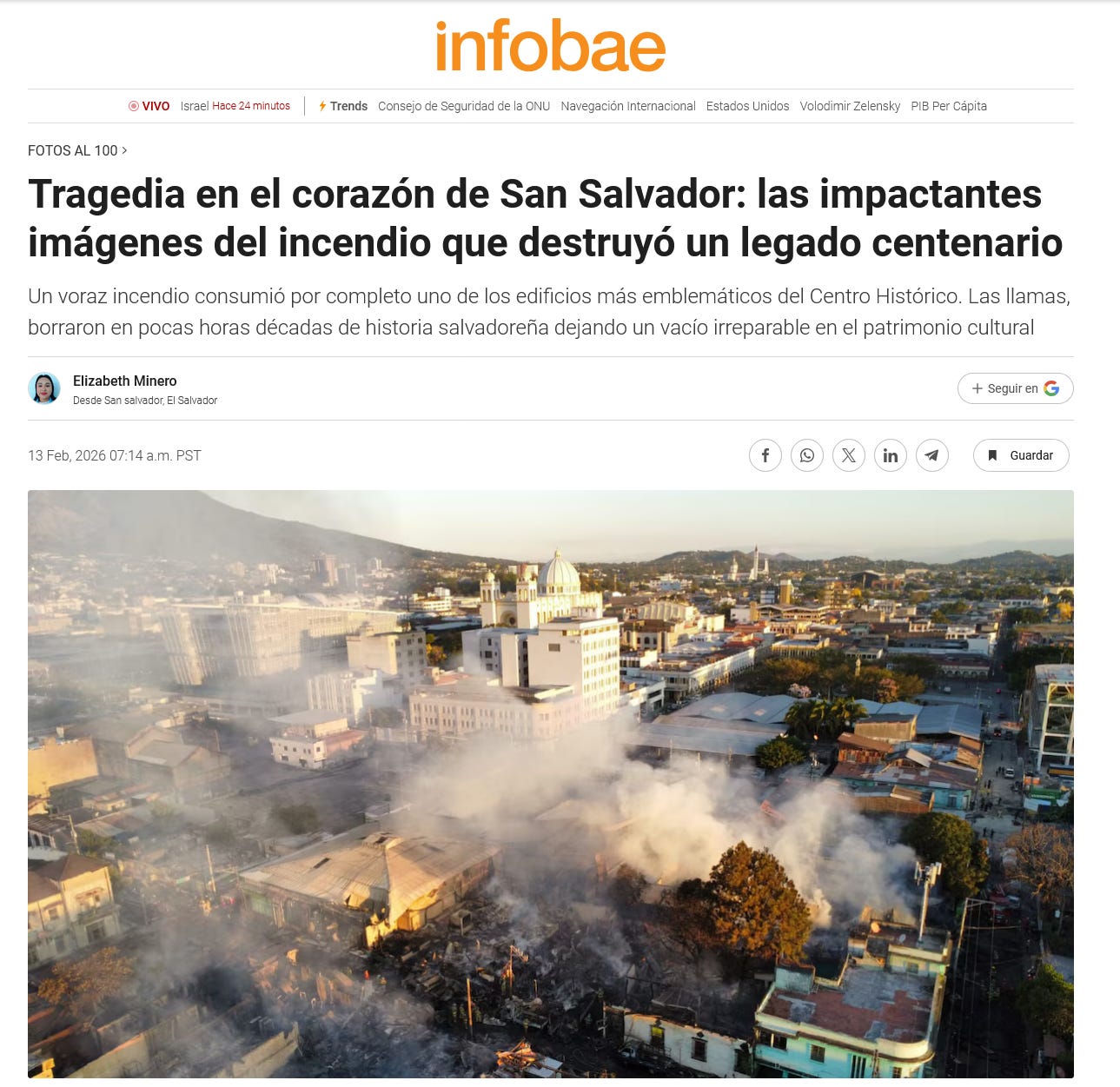
Since 2024, there have been a series mysterious fires breaking out in or around the Historic Center of San Salvador, the worst taking place on February 13, 2026, which not only destroyed an historic building constructed in 1917, but tragically also resulted in five deaths. Whether or not all these fires have been the result of arson, one thing is for sure, they are a boon for real estate developers seeking cheap land parcels.
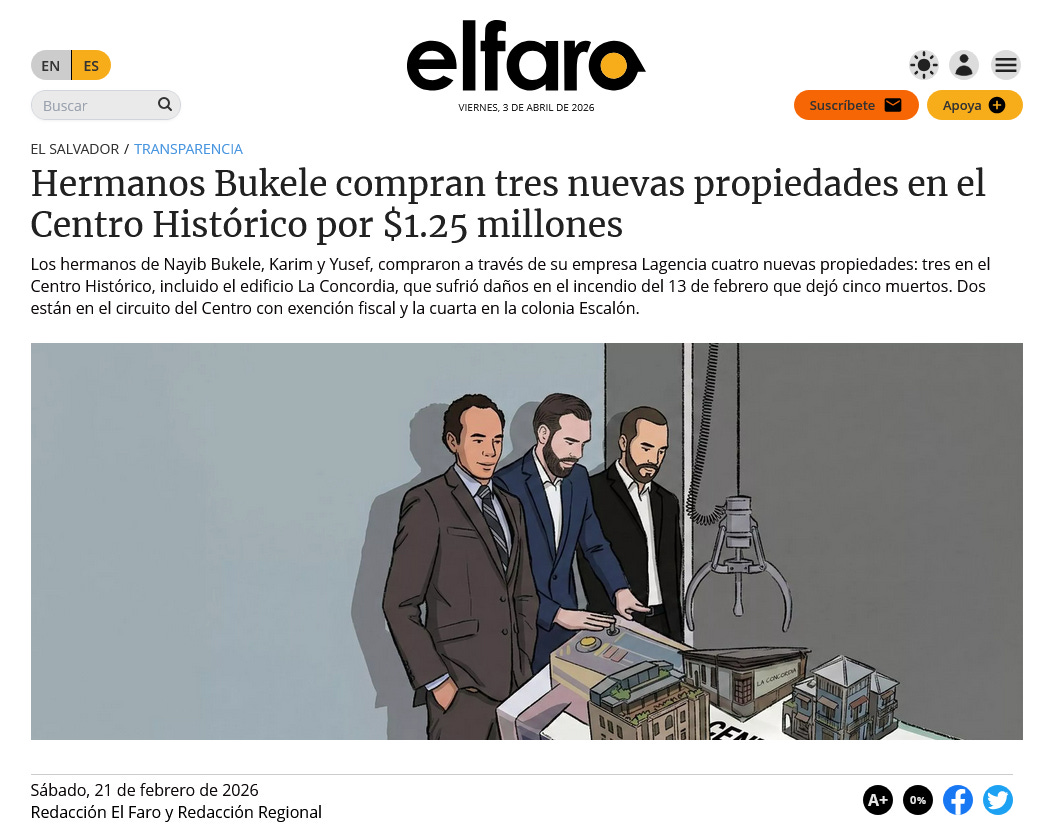
Because this story would be incomplete without some good old fashioned government corruption, in February of 2026, El Faro reported that the Bukele family had purchased three (3) new properties in the Historic Center of San Salvador for $1.25 million. Since 2023, the total value of properties owned by the Bukele clan surpassed $2.8 million. The Bukele clan took advantage of the same law that excused them from having to pay taxes.
So who is the Historic Center of San Salvador really for?
All the preceding text was translated from Entre la renovación y el desarraigo: efectos de la gentrificación y la turistificación en el Centro Histórico de San Salvador,” by Delfia A Méndez Casamalhuapa, Universidad de El Salvador (UCA).